6 Tips to Make Much Faster Thesis

To overcome the blank you need to write

On more than one occasion you will have to deal with a bad common student: the blank sheet. The only way to break this deadlock is writing. No matter if the last paragraph's end does not convince you, you feel that it is not clear or writing does not seem adequate, the important thing is to leave behind the blank, then there will be time to correct.

Writes even though you may feel what you missing genius

Creative thoughts will not appear as soon as you begin to write, why write even feeling that paragraphs lack of genius. Insurance when you take several hours of writing will begin to flower ideas you want to capture in your thesis work. Once you are done, take a few minutes to reread and surely you will notice the genius that you did.

Write all your ideas on a separate sheet

But to the extent that the writing progress you will occur a host of new ideas, the reality is that it is impossible to write everything at the same time. So the best thing is that in parallel you carry a sheet where you can leave all the great ideas that come to your mind, so that you can later give it a better organization.

Fixed deadlines prior

Once you begin to work on the thesis, you must set deadlines of each section with your tutor. The pressure of knowing that you comprometiste with another person, you will require to write, to avoid distractions and even will motivate you to finish it as soon as possible. In addition, meet dates will give your advisor sufficient time to review the work with peace of mind.

Not be trying to do the work master of your life

The main objective of the thesis is to demonstrate that you have the ability to answer a given question by making proper use of sources, data and literature on the topic. Keep in mind that nobody expects that you win the Nobel Prize or you become a researcher noted for your thesis work.

Do not try to meet the expectations of anyone

The reality is that they few people, besides your teachers of thesis, which will read your thesis work. Although this may seem daunting, the reality is that it is a good way to avoid pressure, given that, at the time of writing, you won't meet expectations of none other than yours.


Dissertation Tips to Choose the Subject

The theme you choose for your thesis should be suitable. Otherwise, the process of elaboration of the same will be tedious and you will run the risk of not saving her successfully or get tired and don't even have the strength to finish.

Then we suggest you learn some useful tips that will help you select the theme that is more to your liking to make your thesis.

1. Select a topic that interests you

The theme you choose will call your attention; you must like it's great and must be possible to investigate for a year or more. If there is something specific that is of interest to you during the course, analyze it as possible your research center.

2. Takes into account personal strengths and weaknesses

You can study a subject that you've already researched for a certain period of time or avoid experimenting if you think you're not good at those tasks. Be honest with yourself and select a theme that will be easy.

3. Limiting the theme

The portal indicates you can also limit your topic to something that can contribute to the academic community.

4. Sources

The sources you choose must be current. Otherwise, your thesis will be lost of fashion and not too will bring to the community. The overall quality of your work will drop if you use statistics with more than 10 years old.

5. To provide for your career

It is advisable that your final material is rich for your professional career. To ensure this, you can do a research allowing you to then write a book about the topic or completing an investigation

Writing Strategies

Writing Strategies

1) The writing is not revising. When you are writing, just write! Do not stop. Go ahead. After review, Perfectionism is your worst enemy, especially in the early stages.

2) Start with what you already know. "The first projects come from the heart." In verbal conversation, effortlessly tell the other person what you already know. Then write the history. In fact, you may find it useful to record your own voice as you say is history so you can play again to write.

3) Write at least one page of your dissertation by day. But at least one page. And you don't have to be in order. Any page is fine.

4) Allow drafts. Quickly launch and iterate rapidly. The draft must be very hard. Don't worry about mistakes. But also turn around quickly the revisions.

5) Use a diagram. It helps to maintain a consistent flow throughout your dissertation. Try to construct a mental map - a "tree" of ideas with the idea of the base (root) of the central ideas and branches around the root, and so on.

6) "PowerPoint" his ideas. Then turn the slides in prose.

7) Seek feedback on a regular basis. Feedback helps to make the revisions turned quickly, too.

8) At first, ignore your audience. He writes for himself, first. Then, once you have written a lot, consider your audience, and revise. Write out, not inward.

9) Writing out of service is OK, maybe even preferable. I made the mistake of writing my first works of research with the purpose of introduction to the conclusion. However, research is always unpredictable and so amorphous that important intermediate sections would always change. Subsequently, would also make it the introduction and the conclusion. Now, start the intermediate sections first, then write the introduction, conclusion and final abstract.

Dissertation Writing Tips for University Students

If you are in their last year of University, it is likely that you will be preparing to write a thesis. Most likely either the largest or most stressful of work piece you have had to do, so here are some tips on how to get through it:

1. Start early!

You will be in a position much better if you start earlier, rather than the last few months / weeks. If you had to choose your title before the summer holidays then, use time free to travel for research and do that you might not be able to do during the course. If you did not have to choose, start to consider what you would like to do what is best informed comes the beginning of the term.

2. Set yourself small deadlines

This will help break down, rather than having 10,000 words and more books that you can see it looming in front of you, you go through the chapter books by chapter, making notes overview before focusing on the detail you need. Set their own terms, four chapters before a night of partying with friends, two books by next Wednesday. Once you have most of your research done, aiming to write 500 words a week. Sitting down to write 500 words is less afraid to say "this week I'm going to write a Word 2000 chapter", and before you know it, you will have 10,000 words.

3. Have a strategy before you start

Even if you haven't completed your title and you're not 100% sure of his conclusion when he starts writing, have a rough idea of where their ideas are directed. This will prevent that talk and write words for the sake of it. Make plans for each chapter, but not to make them so hard that cannot fit any new idea. Everything you write has to be relevant to its title, check again through paragraphs once you have written them for sure.

4. Choose something you enjoy / love

A thesis is often the greatest freedom you will have to choose an essay topic, while a Bachelor's degree, so don't forget to make the most of it. Choose what you want to spend seven or more months writing. Don't choose a theme to please a particular supervisor, if you lack the enthusiasm to be displayed through his writing. No matter what you choose, you suffer a little come hand in time for what the best is to start with something that you have an interest in.


5. Don’t be afraid to ask for help

Ask for help with your thesis will not reduce its brands or make look bad (unless you have someone else to write for you, do not do that!). Go to see your supervisor as possible to ask for advice on how to get the degree you want. If the reading test is not his forte, ask friends and family for help. The slicker that is, the greater will be its brand.

6. Do not leave for the last minute to print and bind it.

See above. That Yes, do not leave it too late - are you from queuing for hours.

7. Most importantly, save and make backup copies of their work on the go.

If you break the computer, and that not everything is on a stick / external hard drive will be a sad day and this is all, some tips and tricks to help you overcome the madness dissertation. She is not that tired, sad broken student, in the library, pulling the hair with the stress of writing it all in the last week.

Time Management

Time Management

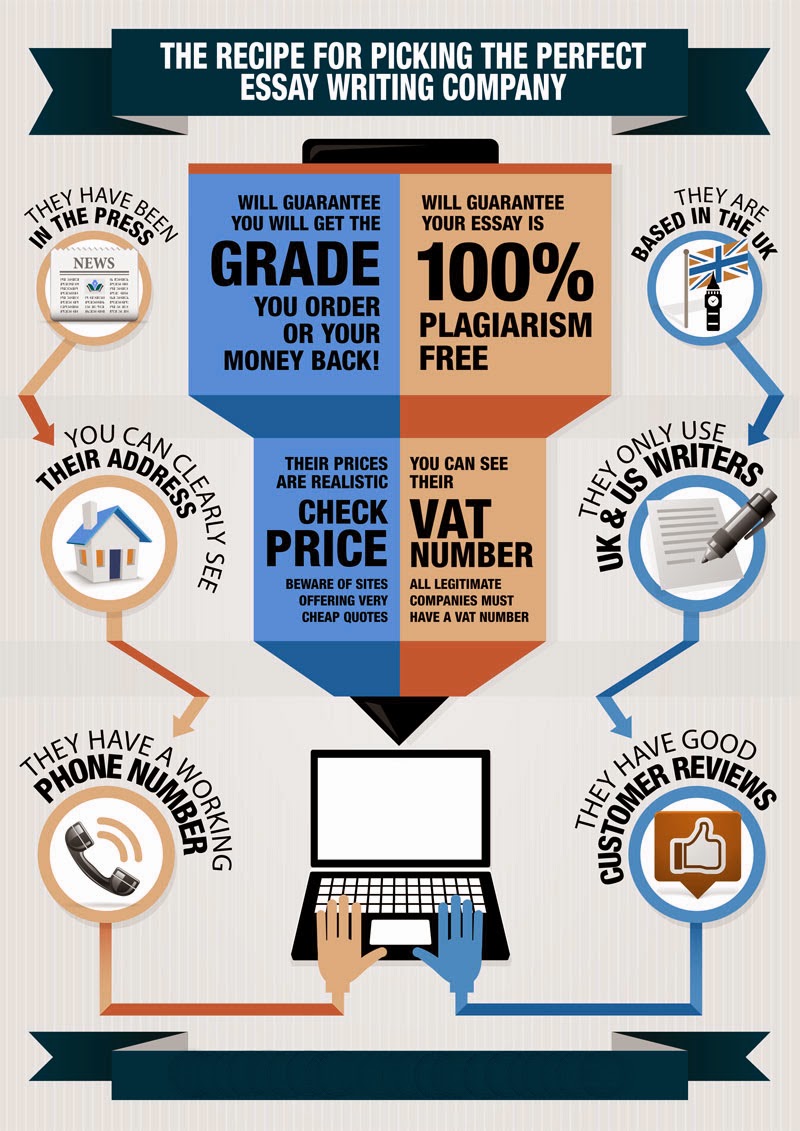
The Essay Recipe

writing a essay

Facebook VS Google

Facebook VS Google

Educating the WorkForce of the Future

Educating the WorkForce of the Future

Tips to Make a Thesis


This guide will provide tips for how to write a thesis of degree and how to solve the problems of the home, organization, and explanation of the chosen topic.

Feel more relaxed when it comes to a thesis, it is a matter of writing the first chapters. It should take into account that it is a difficult, long and tedious task. At the end of the work, you can enjoy the satisfaction of fulfilling duty and have contributed to scientific knowledge.

Before the writing of the thesis, the author must overcome a series of obstacles to be able to finish with the work. The key points that we suggest to properly structure a thesis are:

The first thing you need to do is to verify if the institution attending has any required redaction, and if there is a standard form, since many universities require a declaration.

Cover (title page): all theses must have a cover. The format of presentation of a thesis requires the title page, which can vary between institutions, but must always contain the name of the author and the title of the thesis.

The content index: it must have the title of the work, as well as subtitles of each of the chapters.

Introduction: It is the exposure of the global problem of the chosen topic. What's the topic of the thesis and why it is important must be clear.

Please note that having worked so long on the project already will be much immersed in it, so you don't miss the familiarity that the reader may have regarding your thesis theme. Remember that writes for researchers in the general area, but not all have to be specialists in the chosen topic.

In the first paragraphs of the introduction prose, can use the rigor that the scientific writing because still we have not ventured into the development of the work is not necessary.

To achieve the same read logically it may require several drafts as long as it is brief. It is always convenient, once completed it, read someone not know topic to see that you think after reading it.


Summary: It is the synthesis of the thesis. This part of the thesis is the most widely read and that you will be given greater importance because you must ensure that the reading of the complete work is not necessary to know is about the same.

The summary is an accurate description of the general and the particular problem that is addressed in the thesis; your method solves it, their results and conclusions. In general, it contains no references. When you need one, it should be included in the text of the same abstract.

You should write it once is this coming to the end of it since it requires several considerations regarding the project. In addition the number of words; control should be It should not exceed the 200, 300 words.

Dedications and acknowledgements: the majority of theses authors include acknowledgments and Dedications to those who have helped them throughout his life, such as family and friends; and especially to those who collaborated on the specific scientific issues. If someone helped draft part of the thesis, it must be well cleared up who made them and in which sections.

Elementary chapters: journals, articles written by the same author are often the intermediate chapters of the thesis. In addition, it is necessary that the thesis some theories are established describing experimental techniques, and will review what was done in several different problems.

Theory: To be able to report about a theoretical work that is not original, it will need to include enough material to convince the reader of the arguments used and its physical basis.

It may also occur the theory from the beginning, but you should be aware of two pages of arguments which could be found in normal texts should not be reproduced. Neither theory that has no relationship with the work must be included.

In case of informing their own theoretical work, it should be more detailed, giving long explanations to the appendices.

Results and discussions: the thesis usually are part of the same chapter; tend to merge since there may be multiple results, and if all occur before the discussion, the reader can miss or forget what they had been reading.

To be able to present them in separate chapters, results and discussion must come from a certain type of matter.

Conclusions: Are the contributions that the author uses to confirm or refute the hypotheses raised in the introduction. They have acquired a scientific character since articles that support they serve to provide the necessary evidence requiring the results and discussion to back them.